

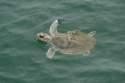
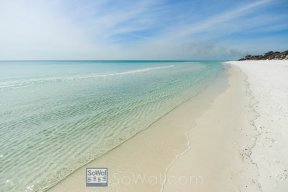
This area never ceases to amaze me. There is an alligator on the beach at the Spooky Lane beach access right now. He is swimming, surfing and every once in a while he comes out. WCS is on the scene keeping spectators far away and the trapper is supposedly on the way. Here are some pics I took.
Cheers, Geo
Replies
130Beach Comber
I heard that he was originally spotted closer to Draper yesterday around 4pm. Draper is the closest coastal dune lake to where I took the pics today so that might be where he decided to make his way into the Gulf. It was surreal watching him swim parallel to shore with his head above water. Some of the time he let the waves and current take him but when he swam he sure was fast! I'd estimate he was 6-7 feet from tip of tail to his snout.
So my friends. Fear not the sharks in the Gulf. The bears and gators swimming in its emerald waters are a far greater threat! hahaha You can't make this stuff up!
That's right I remember hearing about a bear that made his way to the gulf around PCB just last summer, right? Well, great photos!! Thanks for posting. I would've loved to see that first hand.

SoWal Expert
If he would only have survived a couple more days in the Gulf, why did we have to capture him - a death sentence if I read the article correctly? 
Beach Lover
Geo -
Did it look like the alligator was "struggling in the riptide" like the article pointed out? Or is that just more messed up news?
Geez, I can't believe they gotta kill the thing. We used to vacation in Sanibel a long time ago, and there were gators on or right next to the beach pretty often. Most people just let them wander - really didn't pay them much attention after awhile.
I don't think alligators can "run" as fast in the beach sand, but then again people can't either .
Did it look like the alligator was "struggling in the riptide" like the article pointed out? Or is that just more messed up news?
Geez, I can't believe they gotta kill the thing. We used to vacation in Sanibel a long time ago, and there were gators on or right next to the beach pretty often. Most people just let them wander - really didn't pay them much attention after awhile.
I don't think alligators can "run" as fast in the beach sand, but then again people can't either
.
Beach Lover
Doesn't he need to be put back where he would be happier?
At what point is the behavior considered part of micro evolution? Maybe we should let em surf......


Admin
Alligator captured on South Walton beach (with PHOTOS) | alligator, beach, johnson - News - Northwest Florida Daily News
Beachgoers had more to view than sand and surf Monday morning as deputies from the Walton County Sheriff's Office cordoned off a stretch of beach at Ed Walline Park to corral a transient alligator in the surf.
The alligator was reported to the WCSO Sunday evening and beach deputies were dispatched early Monday morning. The alligator was stuck in the rip tide and rolled in and out of the surf, rarely making it to the beach.
View a photo gallery of the gator being captured and taken away.
Onlookers were kept a safe distance away and soon many people were gathered along the dunes to watch and take pictures.
As deputies waited for Justin Johnson, an alligator trapper with the Nuisance Alligator Program, they kept a close eye on the gator and navigated their vehicles to keep curious beachgoers at a safe distance.
Upon Johnson's arrival he and Sgt. Ryan Brown of the WCSO took to the beach and waited for the reptile to get close enough to harpoon.
"The harpoon doesn't penetrate enough to kill," said Johnson. "It gives me enough leverage to pull the alligator out of the surf."
When the alligator was approximately 30 yards from the beach, Johnson and Brown waded waist deep into the water, harpooned the alligator and with help from local charter fisherman, Jimbo Bishop who had been summoned to help if Johnson was unable to respond to the scene, pulled the alligator onto the beach.
On shore, the three men quickly muzzled the 7 ? foot alligator and Johnson tied its legs with electrical tape and secured it for transport.
The alligator didn't put up much of a fight.
"These gators can't take the salt water for long," Johnson said. "They can survive about seven days in the surf and this fellow has been swimming now for more than 24 hours; he's tired."
It took Johnson, Brown, Bishop and another deputy to lift the alligator into Johnson's truck.
"We're going to take him to a holding pen for now," said Johnson. "I'll have to find out if this alligator is going to be placed somewhere."
The Nuisance Alligator Program allows for some transient alligators to be relocated, usually if the alligator is shorter than four feet.
However, since this one was more than seven feet it's likely it will be killed.
"This is the first stray alligator of the season," said Johnson. "With it starting to warm up others will be on the move around the coastal lakes and we'll (the alligator trappers) be busy."
Beach Fanatic
Sounds like a sad fate for Mr Alligator, I sure wish he could just be relocated. Seems wrong to kill a gator for trying to expand his range to survive.
Beach Fanatic
According the FWC:
Generally, alligators may be considered a nuisance when they are at least four feet in length and pose a threat to people or their pets or property. Alligators less than four feet in length are naturally fearful of people and are not generally capable of eating anything larger than a small turtle. They eat small fish, frogs, and other small animals. They are too small to be a threat to even small pets and pose no threat to people. They are typically not dangerous to people unless someone attempts to handle them. Also, they are common in Florida, and the mere presence of a small alligator is not cause for concern, even when they turn up in places where people may not expect to see them such as retention ponds and drainage ditches. However, occasionally alligators less than four feet in length are legitimate problems and must be addressed.
Some people would like the FWC to relocate nuisance alligators. While, in rare cases, the agency does allow for the relocation of alligators less than four feet in length, relocation of larger, problem alligators is not an effective solution. Relocation does not change the behavior that caused the alligator to be a nuisance, and relocated alligators frequently return to their capture site. As a result, these alligators would continue to pose a danger. Also, viable alligator populations exist in all suitable habitats in the state, making the relocation of alligators an unwarranted exercise from an ecological perspective. Relocation of wild animals can also facilitate the spread of disease.
Alligators commonly become a nuisance when they are fed by humans. Fed alligators lose their fear of people and can be dangerous. For this reason it is against the law in Florida to feed wild alligators or other wild crocodilians.
I too hate to see them destroyed but once a large one makes its way into areas frequented by humans, they really don't have much choice.

Beach Lover
I thought salt water could mess up their eyes.......
SoWal Expert
But he wasn't being a nuisance from the reports - he was swimming in the gulf and in the waves. I didn't hear that he approached anyone, begged for food, etc.

SoWal Guide
thanks for the pix Geo. poor gator dude. I am sorry he has to be bothered at all, but that's the way it is. would have loved being on the beach with you today but I may have screamed a coupla times.
Beach Fanatic
But he wasn't being a nuisance from the reports - he was swimming in the gulf and in the waves. I didn't hear that he approached anyone, begged for food, etc.
Exactly but the problem will be the humans that are the nuisance to him and he is large enough to kill pets and possibly kill or seriously injure a child or even adult.
It is sad, it is a huge problem at Disney World, because the idiots that feed them and then they have to remove them and try to relocate but if they show up again and have to relocate them, they are usually destroyed.
So basically even if he minds his own business they will remove him and possibly kill him to prevent some idiot from getting too close. :angry:
Edited
Beach Fanatic
how many times a year are alligators spoted on the beach on 30-a?grayton beach has beware of alligators sign near a dune lake.Has anyone ever heard of a gator attacking a person on 30-a?
Beach Lover
While the county's putting up signs, maybe they can put some up around the lakes that say - Beware of People .
.
SoWal Insider
how many times a year are alligators spoted on the beach on 30-a?grayton beach has beware of alligators sign near a dune lake.Has anyone ever heard of a gator attacking a person on 30-a?
That's the same question I have had. This is my first time hearing of one. Maybe they should do more research or try to ascertain why the gator needed to go gulfing for food. It doesn't take a rocket scientist to figure out that it is probably the one that had been living at Draper Lake peacefully for quite some time. I've also never heard of them being a nuisance in our area,either. Killing it really irks me.

SoWal Expert
how many times a year are alligators spoted on the beach on 30-a?grayton beach has beware of alligators sign near a dune lake.Has anyone ever heard of a gator attacking a person on 30-a?
Other than man attacking gator, I know of only one which happened in the Pandora's parking lot, but it started by a particular person trying to wrestle the gator.

Beach Lover
gator death
The truth is any gator over 4ft that is captured is killed. The trapper makes his money this way. They get to sell the hide and meat.
The truth is any gator over 4ft that is captured is killed. The trapper makes his money this way. They get to sell the hide and meat.

SoWal Expert
Geo, thanks for posting the pics. I'm sorry to hear of the fate of the poor guy. Maybe I missed something, but shouldn't there be a non-profit way to handle them and get them to a place where they can find food and live?

hmmmm......can't remember
Sheesh. The poor dude was just surfing. I know other folk over 4 ft. who will surf and alternately bum food off tourists or threaten to bite them, and nobody skins them and eats them.
It's not like he sat on a private beach or left his tent out there.
It's not like he sat on a private beach or left his tent out there.
SoWal Expert
Sheesh. The poor dude was just surfing. I know other folk over 4 ft. who will surf and alternately bum food off tourists or threaten to bite them, and nobody skins them and eats them.
It's not like he sat on a private beach or left his tent out there.
Thank you. I think I could get really worked up over this, but alas, I'm all the way in Texas.


Beach Fanatic
The pictures of the surfing alligator made me so happy every time I thought of them today. I am so depressed to find out he's probably dead already.
SoWal Expert
The pictures of the surfing alligator made me so happy every time I thought of them today. I am so depressed to find out he's probably dead already.
I know.
Beach Fanatic
Ok, unless I was told some BS, which I hope not, according to the very nice officer answering calls at the WCSO dispatch the gator has been relocated.
SoWal Insider
Well, that's what I heard but I want pictures and updates as proof positive. A postcard would be a nice addition. But, the postcard is probably just as forthcoming as the relocation. :roll:
hmmmm......can't remember
Well, that's what I heard but I want pictures and updates as proof positive. A postcard would be a nice addition. But, the postcard is probably just as forthcoming as the relocation. :roll:
A postcard from Mr. Gator?
(That would be awesome.)I'm with you, too, Punzy. Maybe I watched too much Crocodile Hunter, but I got a real kick out of the surfing Gator. I knew they were freshwater beasties, too, and that they can't hang out there long, but the article STILL reminded me of me--I get tired and my eyes get red from a long day in the ocean, too. I'm mildly allergic to seafood, but it's tasty on vacation.
I'm really not going to get all upset, but I was alarmed by the tying of his legs over his back, too. That looked awfully uncomfortable.
I'm also still not quite used to the fact that they're not endangered anymore. They're unique to our part of the world, and I hate to hear of them slaughtered.
Beach Comber
sounds like a s'breaker jumpin off a balcony.
Checking your forum account
Please wait while we verify your forum account.