
Tampa Bay Times
9/9/18
Hundreds pack meeting on beach access in Florida Panhandle
The issue of 'customary use' becomes part of the political dialogue in the 2018 election.
SANTA ROSA BEACH — Hundreds of people crowded into a high school auditorium Saturday for an emotional meeting in the ongoing political struggle over public access to the Panhandle's pristine beaches.
The crowd of 800-plus at South Walton High School and the intensity of views were the latest signs of how strongly people feel about this quality-of-life issue after Gov. Rick Scott signed a bill that makes it harder for cities and counties to pass local laws protecting public beach access.
The law (HB 631), which attracted little public attention in the 2018 session of the Legislature, is seen as a direct response to Walton County's adoption last year of a beach access law that has been challenged unsuccessfully by private property owners.
"I believe the notion of a 'private beach' is an oxymoron," said Dave Rauschkolb, a Seaside restaurant owner and a leader in the battle to preserve public access to beaches, known as customary use.
Josephine Brown, 92, of Seagrove Beach, wearing a sticker that said "CU at the beach," said her family has been enjoying the beaches of South Walton for six generations with no problems until now.
"We had bonfires. We camped out," Brown testified. "Those days are gone forever, but still, we would like to maintain a little bit of that personal closeness that we always had with the beach."
Lynn Fitzgerald, who has owned a home on Miramar Beach since 1994, said her property deed, like many, extended to the mean high tide water line but that "we never had a problem." Making things worse, she told officials, is the proliferation of commercial vendors renting out beach chairs and umbrellas to sunbathers.
Asked about the governor, she said: "This is going to hurt him. It will also cause tourists to leave Destin and go to Orange Beach (Alabama)."
Scott, who in July signed an executive order that sought to blunt the new law's enforcement, may hear from residents Sunday when he makes a campaign appearance at The Donut Hole in Santa Rosa Beach.
Tom Ballantine, owner of a condominium complex at Seagrove, said: "I'm a Christian. God made the beach and it's open to all of God's people." He got a thunderous round of applause.
Afterward, Ballantine said he did not think the controversy would have any effect on Scott's senatorial ambitions. "I really like Rick Scott," he said.
Avalon Beach homeowner John Vundschow took a different view. He said a proposed new county customary use ordinance is an illegal taking of private property without just compensation, in violation of the Fifth Amendment to the U.S. Constitution.
More than 5,000 people have joined a Facebook group, Walton County Ideas for Visioning and Quality of Life, where the beach access issue is by far the major topic of conversation.
More than 7,000 residents have signed affidavits in support of a new county beach access law in an effort organized by a new non-profit group, Florida Beaches for All. The Walton County attorney, Sidney Noyes, said she was overwhelmed by the response.
Saturday's meeting was to have been the first legal step by a Florida local government to comply with the new law.
But the county discovered that 13 affected property owners did not receive legal notices of the meeting as required by law, which could put the county in legal jeopardy if it took any formal action. So a vote was postponed until November and county officials took public comment for nearly three hours instead.
Walton County is solidly Republican, but in interviews, people at Saturday's meeting singled out Scott for criticism and said he should not have signed the bill into law. In casual conversations, people dressed in tropical shirts and flip-flops toss around "HB 631" like an epithet.
Mike Hepner, a Miramar Beach X-ray technician who wore a "UNF Ospreys" T-shirt (his daughter is a student there) and is a registered independent voter, said he's less likely to vote for Scott because of his decision to sign HB 631.
"Definitely," Hepner said. "I believe the beaches were put here by God for our use and we want to keep it that way. I will vote for people who are for keeping customary use."
https://www.tampabay.com/florida-politics/buzz/2018/09/09/hundreds-pack-meeting-on-beach-access-in-florida-panhandle/
Replies
193
SoWal Insider
Read that article this morning. Only 39 settlements and the rest are truly private? 2024 tourist season is going to be interesting.Anyone know exactly what this means?
“These new rules only apply to properties east of Tops’L State Park. To the west are renourished beaches that are open to the public.”

Beach Fanatic
Anyone know exactly what this means?The renourishment they did west of topsail about 20 years ago made the beaches public. That's why beach owners oppose renourishment. Instead of seeing it as a benficial and necessary step to maintain the beach and protect property they see it as the people stealing "their" beach.
“These new rules only apply to properties east of Tops’L State Park. To the west are renourished beaches that are open to the public.”
SoWal Insider
The renourishment they did west of topsail about 20 years ago made the beaches public. That's why beach owners oppose renourishment. Instead of seeing it as a benficial and necessary step to maintain the beach and protect property they see it as the people stealing "their" beach.Does this include beaches at Tops’l, Seascape, and condo complexes etc?
Edited

SWGB
Does this include beaches at Tops’l, Seascape, and condo complexes etc?
It even includes Sandestin, but geographically you gotta get there first.
Beach Fanatic
By DOTTY NIST
The Walton County Sheriff’s Office (WCSO) hosted a 1 1/2-hour town hall meeting on Sept. 21 to discuss the situation on the beaches in Walton County with regard to public use of the beaches and private property issues.
This was in the wake of the June 30, 2023, partial settlement agreement in the Walton County customary use complaint, a lawsuit that has been ongoing in Walton County Circuit Court since December 2018.
Originally including 1,194 beachfront properties, the lawsuit has been an effort by Walton County to affirm a right by the public to customary recreational use of the beach countywide.
Held at the WCSO Substation in Santa Rosa Beach, the WCSO town hall meeting was also live streamed for virtual attendance on social media.
Addressing attendees, Walton County Sheriff Mike Adkinson emphasized that the WCSO was not a party in the lawsuit or to decisions related to it. “I am charged with carrying out my official duties based on the rule of law,” he said.
Adkinson spoke about the some 30 properties that had agreed to a “transitory zone” with limited and conditional public use of the beach during certain hours up to 20 feet in from the wet-dry sand line. This had been an option contained in the June 30 partial settlement. Adkinson noted that the transitory zone parcels are in various locations and are not contiguous. All are located east of the eastern boundary of Topsail Hill Preserve State Park.
Adkinson emphasized that these some thirty parcels are in different locations among approximately 900 parcels located east of Topsail Hill Preserve State Park to the Bay County line.
He noted that among the conditions agreed to for the some 30 parcels was that the county would drop their assertion that customary use of the beach existed on those properties.
The vast majority of the parcels originally included in the customary use complaint have now been dismissed from the lawsuit by Walton County without the owners agreeing to a transitory zone and without customary use having been affirmed on the properties.
Adkinson also spoke about the section of the beach between the western boundary of Topsail Hill Preserve State Park and the Okaloosa County line, where a large-scale beach renourishment project had been conducted in 2006-2007 along that beachfront. He said there is no issue with public use of the beach in that section due to the renourished portion being considered an area subject to use by the public.
Turning again to the beachfront area east of Topsail Hill Preserve State Park, Adkinson said that even on privately-owned beach property not participating in the transitory zone agreement, “what we call routine, normal private property,” where there is restricted access or control only by the property owner under Florida law, a provision in the Florida Constitution applies, providing for public access to the actual shoreline on all the beaches.
>>>>>>>>>>>>>>
Beach Fanatic
This is the beach seaward of the mean high water line (MHWL) where the wet sand is commonly used as a rule of thumb identifier for this area held in trust for the public per the state constitution.
Adkinson noted that as part of the settlement, the county agreed to survey the entire beachfront countywide, with the survey to ascertain property lines and ownership. He anticipated issues with a number of the public beach accesses leading to areas where just to the east and west, property is privately owned and public use may be restricted to the wet sand area.
Adkinson also explained that the settlement agreement tasks the county with advertising and letting the public know which beach areas are public property and which are private, including by means of signage.
While foreseeing problems with public beach accesses flanked by privately-owned property, Adkinson also noted that the survey would highlight property that is publicly owned/available for use by the public that many people do not know about.
“Now our position is simply this,” Adkinson told attendees,”we’re going to have to try and mitigate and manage…between people that have wildly different views about access to the beach. The way the sheriff’s office is going to approach it is this…we’re going to be reasonable, we’re going to try to educate… and we’re going to try to mediate and communicate in the manner of public service.”
“We’re going to do that to the best of our ability,” he continued, “but understand I am still bound by the rule of law.”
While the owner of private property on the beach is not able to stop a beachgoer from walking down the shoreline, Adkinson explained, the owner or their agent may stop them from “entering their property as defined under Florida Law.”
He said what the sheriff’s office was asking in such a situation was for the owner to reach out to the WCSO. have them come out, determine whether the property is private or not, and let the deputy mediate the situation to avoid a confrontation.
Adkinson said that the settlement agreement had stated that the WCSO would develop a policy on management in connection with the terms of the settlement, although the WCSO had not been consulted in advance about that statement. He said he had suggested hiring beach ambassadors who could be “super educated” on law and policy to assist with these efforts.
Adkinson said it would be the decision of the county whether the ambassadors would work under the tourism department, Walton County Code Compliance, or the WCSO, that he did not mind but that the ambassadors should be put in place.
After turning to questions from attendees, Adkinson responded to a query about whether the MHWL, the line separating state sovereignty/public trust beach property from upland property subject to private ownership, could be located a distance away from shore in some areas.
He said the WCSO would not be “dealing with” the MHWL in such instances. “It’s impossible to ascertain every day where that’s at,” he said of the line. Adkinson said the WCSO would be proceeding based on essentially the location where the waves are coming onto the beach to identify the public trust area for all the beaches that is provided for in the state constitution.
He further explained that he would not be forcing people walking on the beach to go out a distance into the water based on an owner contending that their private property extends that far out.
“I don’t think it’s reasonable to tell people to walk out in the water to go around a mythical property boundary,” he said.
In response to another question, Adkinson said there would be liability associated with a person or their agent asserting trespass against a member of the public present on the beach if the property does not in fact belong to the person making such an assertion.
He noted that a person making an assertion that property is private, and knowing that it is not, would face criminal sanctions.
“I cannot strongly caution you enough against…trying to use any type of force to remove somebody from that property;” Adkinson added, “I think that’s going to end really poorly.”
In the midst of the question and answer period, a number of attendees voiced appreciation to Adkinson for hosting the town hall meeting. Several also stated their desire for the Walton County Board of County Commissioners (BCC) to hold a similar meeting to provide information on the topic to the public and respond to questions.
Beach Fanatic
By DOTTY NIST
Walton County has filed motions for summary judgment (MSJ) seeking to affirm a right by the public to customary recreational use of the dry sand area on a total of 192 beachfront parcels.
The motions were filed in Walton County Circuit Court on Aug. 25 as part of Walton County’s ongoing customary use complaint/lawsuit, which was originally brought to court in December 2018. The original lawsuit had applied to 1.194 beachfront parcels, with hundreds of the owners of those parcels having then opted to intervene in the lawsuit in opposition to the county effort.
More recently, there have been settlements and dismissals removing the vast majority of the 1,194 parcels from the lawsuit.
Nine motions for summary judgment were filed on Aug. 25 applying to parcels in nine different areas of the beach. These include: Santa Rosa Beach (27 parcels); Beach Highlands (six parcels); Dune Allen Beach (three parcels); Blue Mountain Beach (34 parcels); Grayton Beach (three parcels); Seagrove Beach (30 parcels); Seacrest (37 parcels); Eastern Lake Beach (19 parcels); and Inlet Beach (34 parcels).
According to the motions for summary judgment, most of the owners of parcels involved in these motions have not intervened in the lawsuit. The remainder, the owners of 22 parcels, did intervene but are “pro se,” not represented by an attorney but representing themselves in the lawsuit.
In the motions, Walton County contends and provides evidence of the public’s use of the parcels involved having been “ancient, reasonable, without interruption, and free from dispute.” These are the essential elements set forth in the landmark 1974 City of Daytona Beach v. Tona-Rama decision by the Florida Supreme Court for the public to acquire a right to the recreational use of privately-owned beach property by means of “custom.”
In 2018, Florida House Bill 631 brought into state law a requirement for proof of those four elements to be provided in a court proceeding in order for a local government to affirm a right by the public to customary recreational use of the beach.
The motions state that the county is seeking to affirm only two specific recreational uses on the parcels, “traversing and sitting on the beach.”
Walton County has stipulated to the court that final judgments on these motions by Walton County Circuit Court Judge David Green. presiding judge, will be deemed to resolve the county’s customary case without a trial. (This is with the exception of a Miramar Beach property, the owners of which have declined entering into a settlement and who have a counterclaim pending against the county.)
The county has also pledged that any appeal of the final judgment on the motions for summary judgment would be “on matters of law and application of law only,” without remand/return of the case to circuit court being sought.
The motions for summary judgment were among the matters discussed at a Sept. 5 hearing in Walton County Circuit Court on the customary use case. In response to a question from Judge Green, Kent Safriet, attorney for a group of intervenors in the lawsuit, stated that five parcels that had recently been brought before the court with requests by the owners to intervene were among those included in the motions for summary judgment. Judge Green had denied these requests to intervene as untimely.
Judge Green commented that he thought these property owners were entitled to obtain legal representation if desired with regard to the motions for summary judgment. He was of the opinion that this would be appropriate—but that it should be done in a way that the owners could simply defend against the motions without “new issues” being opened up.
Judge Green asked Safriet if he would suggest scheduling a hearing on how this could be accomplished.
Safriet said he would recommend the hearing—and also explained that the county motions for summary judgment had just recently drawn the attention of additional landowners included in the motions to the lawsuit. He anticipated that some of those owners would likely be seeking legal representation, as well, and would want to file responses to the motions.
Judge Green asked the attorneys representing the property owners and members of the county’s legal team to work to “come up with a solution” that could be presented at the hearing, which has not been scheduled at this time.
Beach Fanatic
By DOTTY NIST
With the vast majority of the parcels included in Walton County’s customary use court complaint in Walton County Circuit Court now having been dismissed by the county, the Walton County Board of County Commissioners (BCC) has voted to have their legal team convert any already-filed “without prejudice” dismissals in the case to “with prejudice” dismissals.
The decision took place at the South Walton Annex at a Sept. 26 special meeting, following a closed executive session on the customary use lawsuit. Filed in December 2018, the case had originally included 1,194 beachfront parcels for which Walton County had sought to affirm a right by the public to customary recreational use. Hundreds of parcel owners had intervened in opposition to the county effort.
A “without prejudice” dismissal is one that would allow for the parcel to be brought back before the court for the county at a later date to seek a customary use affirmation. A “with prejudice” dismissal is final, and the county would be barred from bringing the parcel back to court for such a request.
Terms of Walton County’s partial settlement agreement approved by the court on June 30 furnished the option for parcel owners to be dismissed without prejudice from the lawsuit under some conditions, with the “without prejudice” dismissal to be converted to “with prejudice” if the county had not filed a new customary use lawsuit by May 31, 2024.
Other parcels had been dismissed by the county with prejudice.
At the Sept. 26, 2023, special meeting, Clay Adkinson, acting county attorney, recommended a motion for the BCC to authorize its legal team to convert “any already-filed dismissals without prejudice” in the case into with-prejudice dismissals, “thereby eliminating any remaining parcels in the case that have not signed the settlement agreement or subject to summary judgment or otherwise subject to appeal or counterclaim.”
District 5 Commissioner Tony Anderson made the recommended motion, which was approved in a unanimous (5-0) vote.
On Aug. 25, 2023, Walton County had filed motions for summary judgment in court seeking to affirm customary use on 192 beachfront parcels whose owners had not intervened in the lawsuit or had intervened without being represented by an attorney.
As of Sept. 27, there was a separate settlement offer from the owners of one property not included with the latter 192 who had previously opted not to settle or seek dismissal from the lawsuit. Those property owners had also filed a counterclaim against the county. Details of the proposed settlement regarding the property, located in Miramar Beach, are not publicly available at this time.

Beach Fanatic
Thanks, James, for posting all the articles. I'm a little surprised that there has not been any more comments posted regarding all this. Maybe it's a dead horse for many, but it hasn't been dead that long. Here's hoping that we can all get along after the recent customary use "settlement".
If we learned anything from the customary use outcome, it would be not to blindly encourage and/or follow your politicians and/or "community leaders" down a path simply because you have a desire especially if it cannot stand up to the U.S. Constitution.
ALL OF US paid the price for this debacle, some, literally, much more than others.
Beach Fanatic
Thanks, James, for posting all the articles. I'm a little surprised that there has not been any more comments posted regarding all this. Maybe it's a dead horse for many, but it hasn't been dead that long. Here's hoping that we can all get along after the recent customary use "settlement".Locals are in mourning, and visitors are shocked when they get here and realize their paradise vacation is fenced.
If we learned anything from the customary use outcome, it would be not to blindly encourage and/or follow your politicians and/or "community leaders" down a path simply because you have a desire especially if it cannot stand up to the U.S. Constitution.
ALL OF US paid the price for this debacle, some, literally, much more than others.
Like losing a loved one. Times a million. Not just for yourself but all your future children and granchildren.
Forever.

Beach Fanatic
What a mess.

 www.mypanhandle.com
Walton Co. on hold to fully enforce new public-private beach rules
MIRAMAR BEACH, Fla. (WMBB) — Walton County Sheriff’s officials have released a standard operating procedure for enforcing public and private beach accesses. After a five-year legal batt…
www.mypanhandle.com
SWGB
#881
Here's an example of what a cluster this is. This is the Hwy 83 public beach access and the four homes to the west. It was originally two lots and has been split into 4. Interestingly the two northern lots have no deeded beach access of any kind. They have effectively been screwed out of beach access and technically would need to utilize the public beach access and could be removed from the "private" beach.

SoWal Insider
#891
Beach Fanatic
View attachment 103014Saw that on FB. Those cones are dangerously close to being washed out into the gulf. I would have moved them upland as a courtesy, had I been walking by.

Beach Lover
View attachment 103014Looks like a never ending FDOT project. SMDH.
SWGB
Call beach code enforcement, pretty sure this isn't allowed.

Beach Lover
#931
Next step....

SWGB
Next step....
View attachment 103019
Enter the Feds.
Beach Fanatic
Next step....Where is this?
View attachment 103019
Beach Lover
Where is this?Indian Rocks Beach FL
From 2018 article: "But the city of Indian Rocks Beach says their city ordinance that was in effect before state law overrides it. Their law is that all beaches in the city are public. They’ve given the homeowner 24-hours to take down his fence, or else he faces big fines."
Beach Fanatic
Indian Rocks Beach FLAnd did the homeowner sue and the city roll right over?
From 2018 article: "But the city of Indian Rocks Beach says their city ordinance that was in effect before state law overrides it. Their law is that all beaches in the city are public. They’ve given the homeowner 24-hours to take down his fence, or else he faces big fines."

Beach Comber
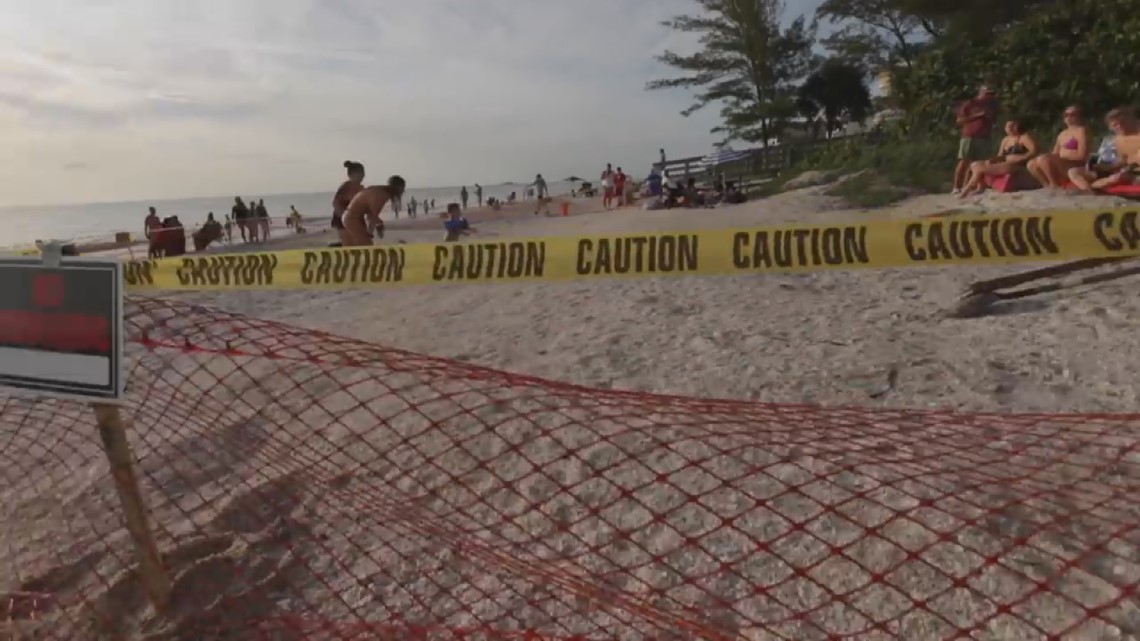
YouTube prankster uses platform to protest Florida beach access law
Beachgoers were furious after a homeowner fenced off part of the beach and put up "No Trespassing" signs. Turns out it was all a prank to protest a new state law.
By the way, that angry neighbor 10News caught on camera is Tenney's dad."
Beach Lover
Late asking this question....how are other counties addressing these issues?
In the midst of the WalCo litigation, HB 631 was signed and put into effect, effectively preempting all but 2 counties with pre-existing Customary Use ordinances (Volusia & St Johns) from adopting or maintaining similar ordinances by any process other than that described in FS 163.035 Establishment of recreational customary use.
So, are other counties NOT pursuing establishment of recreational customary use? Did WalCo now set a precedent that Florida counties would not be successful in establishing recreational customary use?
I'm sure this was all mention somewhere 5 years ago, but I can only retain about 2 years worth of disgruntled information.
SoWal Insider
Next step....Everyone should setup the largest allowable tent, umbrella etc. right in front of them
View attachment 103019

Beach Fanatic
Late asking this question....how are other counties addressing these issues?A few days before Walton County, Indian River County filed in court to affirm customary use on 22 beachfront properties using the process set up in FS 163.035. A trial on that case took place last month but no decision yet.
In the midst of the WalCo litigation, HB 631 was signed and put into effect, effectively preempting all but 2 counties with pre-existing Customary Use ordinances (Volusia & St Johns) from adopting or maintaining similar ordinances by any process other than that described in FS 163.035 Establishment of recreational customary use.
So, are other counties NOT pursuing establishment of recreational customary use? Did WalCo now set a precedent that Florida counties would not be successful in establishing recreational customary use?
I'm sure this was all mention somewhere 5 years ago, but I can only retain about 2 years worth of disgruntled information.
Checking your forum account
Please wait while we verify your forum account.